Xiaomi MiMo-V2-Pro
Agent capabilities entering the global top tier.
MiMo-V2-Pro is here, our flagship foundation model built for real-world agentic workloads. It is designed to serve as the brain of agent systems, orchestrating complex workflows, driving production engineering tasks, and delivering results reliably. With MiMo-V2-Pro, we expand the action space of frontier intelligence, generalizing from coding to claw.
Scaling the Foundation
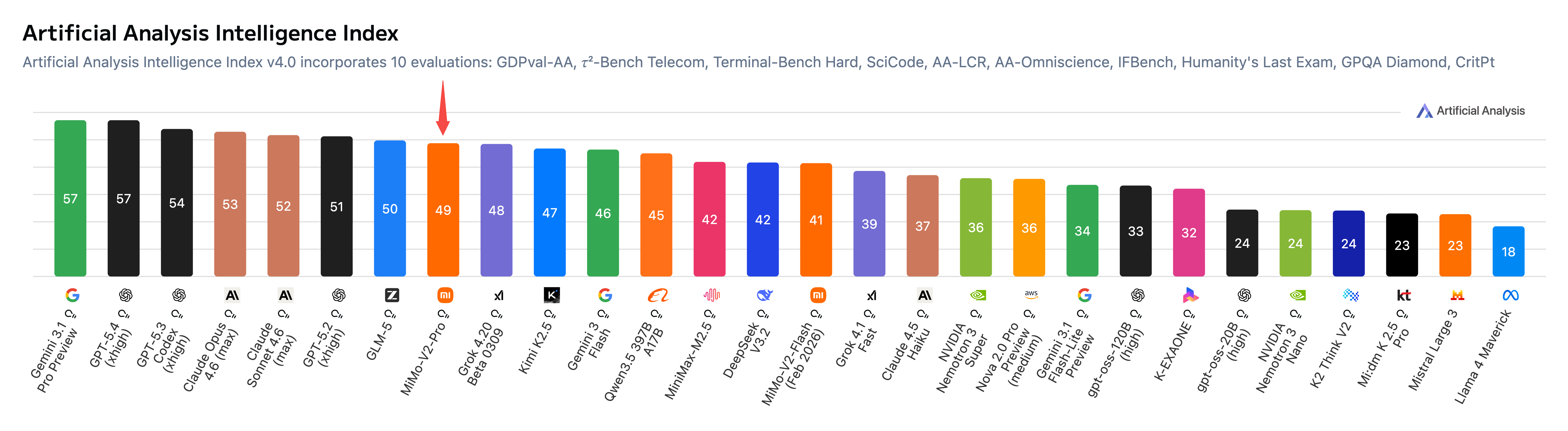
By scaling both model size and compute, MiMo-V2-Pro is built on a stronger foundation. According to the Artificial Analysis Intelligence Index, a leading global benchmark for model comprehensive intelligence, MiMo-V2-Pro ranks 8th worldwide and 2nd in Chinese LLMs.
Trillion-parameter, efficient architecture
Total parameters surpass 1T with 42B active, roughly 3x larger than MiMo-V2-Flash. It inherits the Hybrid Attention mechanism from its predecessor, with the hybrid ratio increased from 5:1 to 7:1, delivering significantly greater scale while maintaining high inference efficiency. It supports up to 1M-token context. A lightweight MTP (Multi-Token Prediction) layer enables fast generation.
From chat to agent
Through post-training scaling across a broader range of agent tasks, the model moves beyond answering questions or generating polished demos. It is built to complete tasks. Our goal is to integrate it deeply into productivity scenarios, making it the brain behind systems and workflows that continuously deliver real-world impact.
Real-world performance beyond benchmarks
MiMo-V2-Pro performs strongly across major agent benchmarks. Its coding ability surpasses Claude 4.6 Sonnet, with general agent performance (ClawEval) approaching Opus 4.6. Tool-call stability and accuracy are significantly improved. We optimize training around real user experience, with a constant focus on how the model performs in practical applications.
Hunter Alpha Goes Live
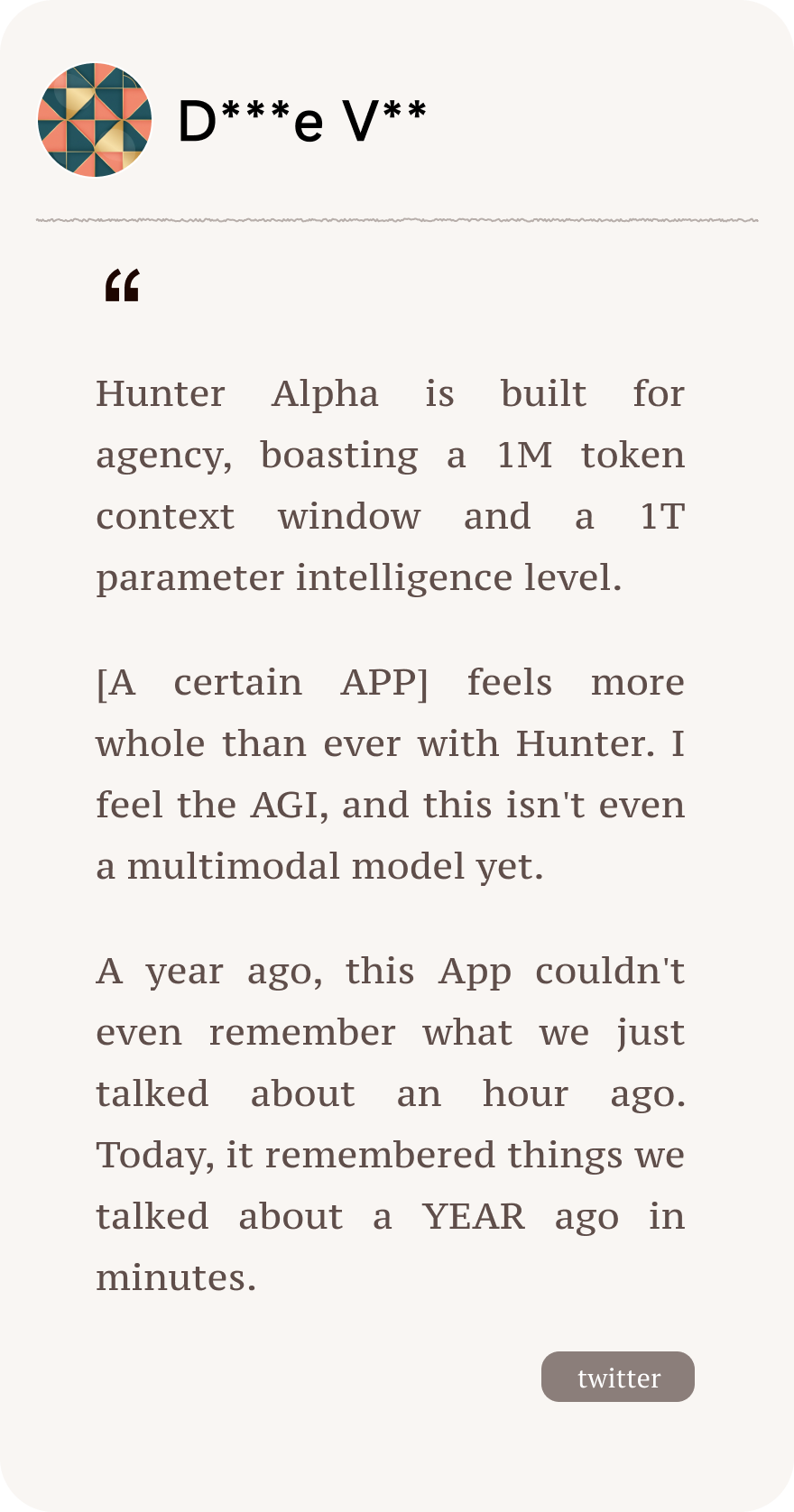
One week ago, an anonymous model codenamed Hunter Alpha was listed on OpenRouter, the world's largest API aggregation platform. During its listing, call volume grew steadily, topping the daily chart for multiple days and surpassing 1T tokens in total usage. Hunter Alpha is an early internal test build of MiMo-V2-Pro.
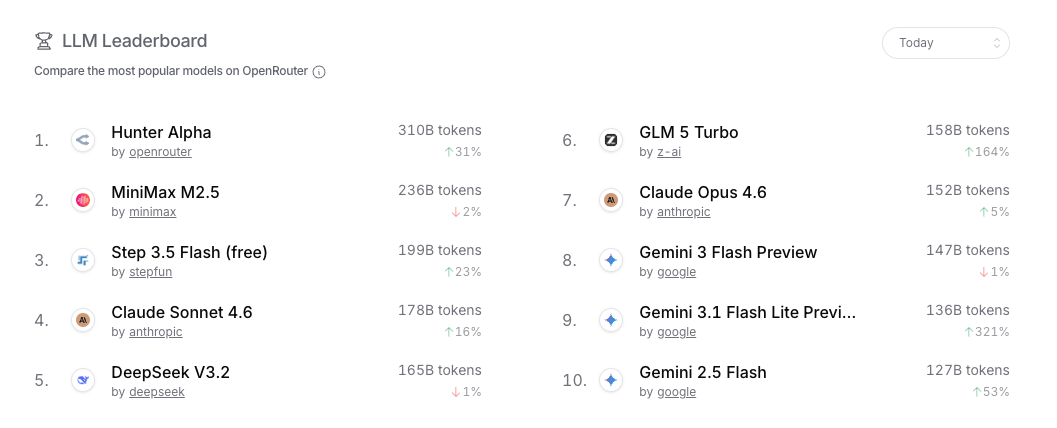
After a week of continuous iteration and optimization, MiMo-V2-Pro has seen significant improvements in long-context capability and agent-scenario stability.
Built for Agents
MiMo-V2-Pro is deeply optimized for agentic scenarios.
The native brain of OpenClaw
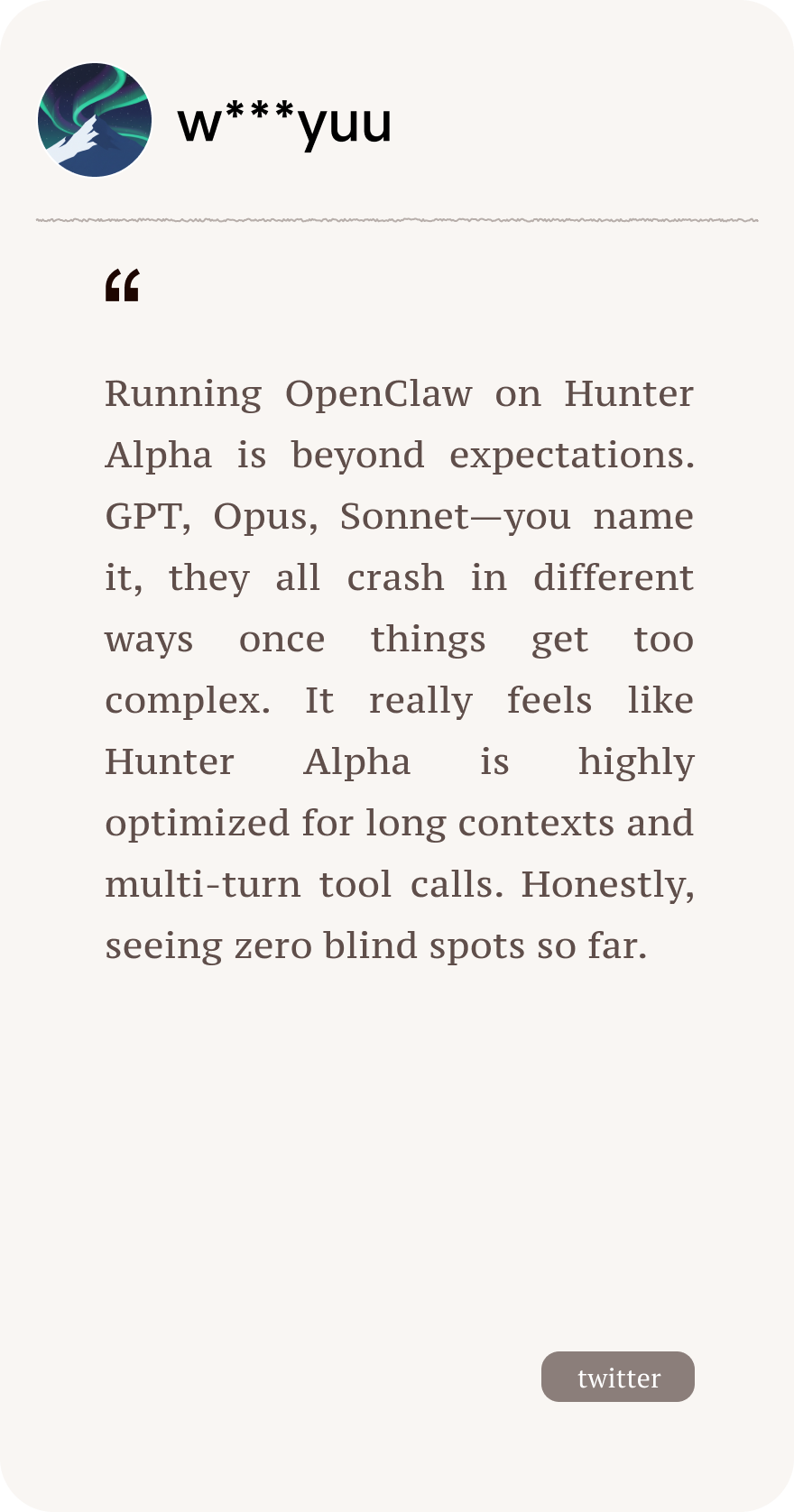
OpenClaw is a general-purpose agent framework gaining significant traction in the open-source community. As the core engine behind such frameworks, the underlying model's capability ceiling directly determines system-level performance. MiMo-V2-Pro is fine-tuned via SFT and RL across complex, diverse agent scaffolds, with stronger tool-call and multi-step reasoning capabilities. On the OpenClaw standard evaluation benchmarks PinchBench and ClawEval, MiMo-V2-Pro achieves globally leading results. With its 1M-token context window, it can comfortably support high-intensity, real-world Claw application flows.
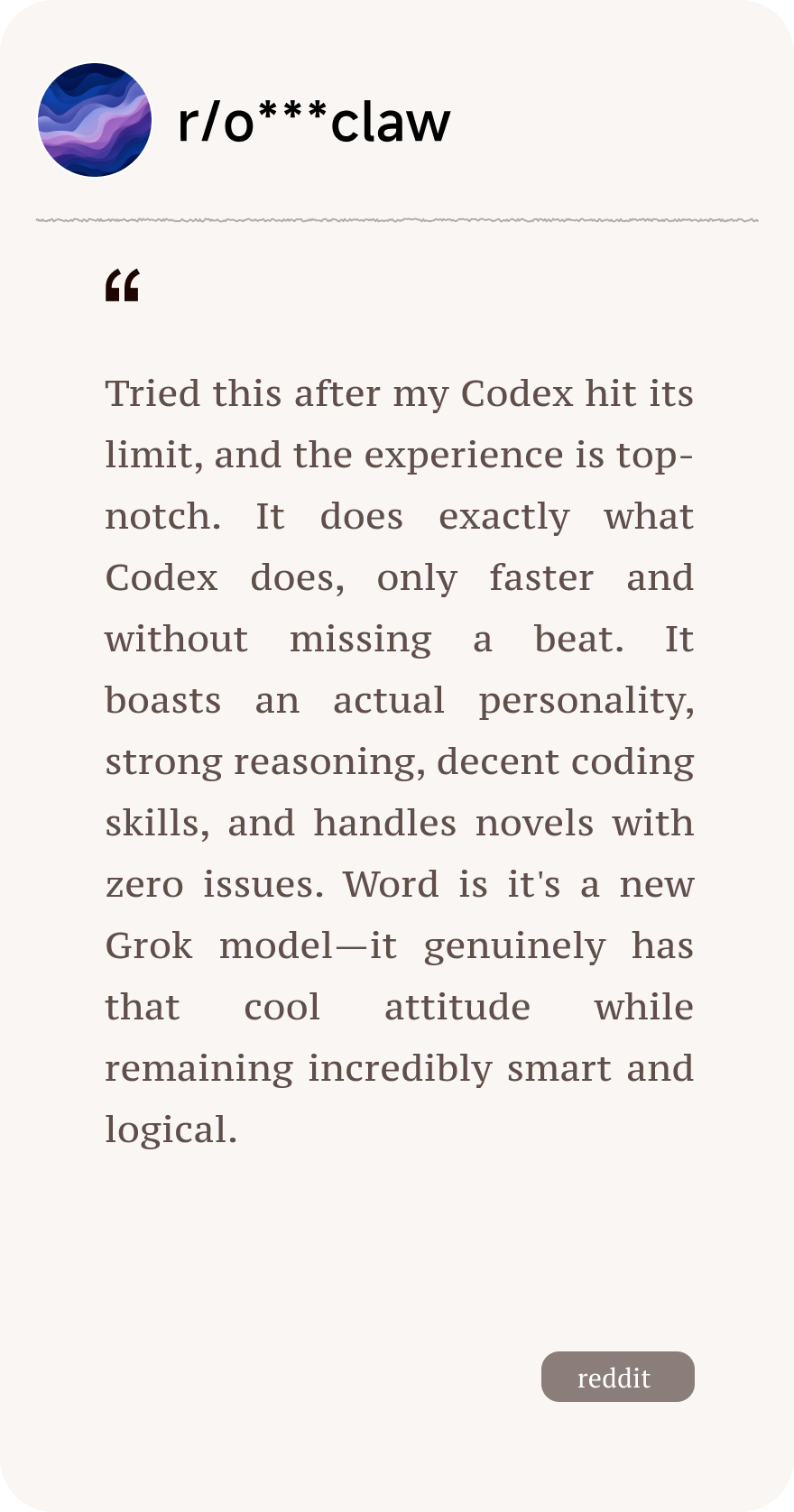
During early-version testing (not the final performance), community feedback consistently reported that MiMo-V2-Pro outperformed Claude 4.6 Sonnet in the majority of scenarios.
Coding Capabilities, Continued
Beyond vibe coding, MiMo-V2-Pro participates in serious software engineering.
In deep evaluations by Xiaomi's internal engineers, MiMo-V2-Pro's experience approaches Claude Opus 4.6, demonstrating advanced code intelligence: stronger system design and task planning, more elegant code style, and more efficient problem-solving paths.
During the Hunter Alpha test phase, the top apps by call volume were all coding-focused tools, confirming MiMo-V2-Pro's high usability and reliability in real development workflows.
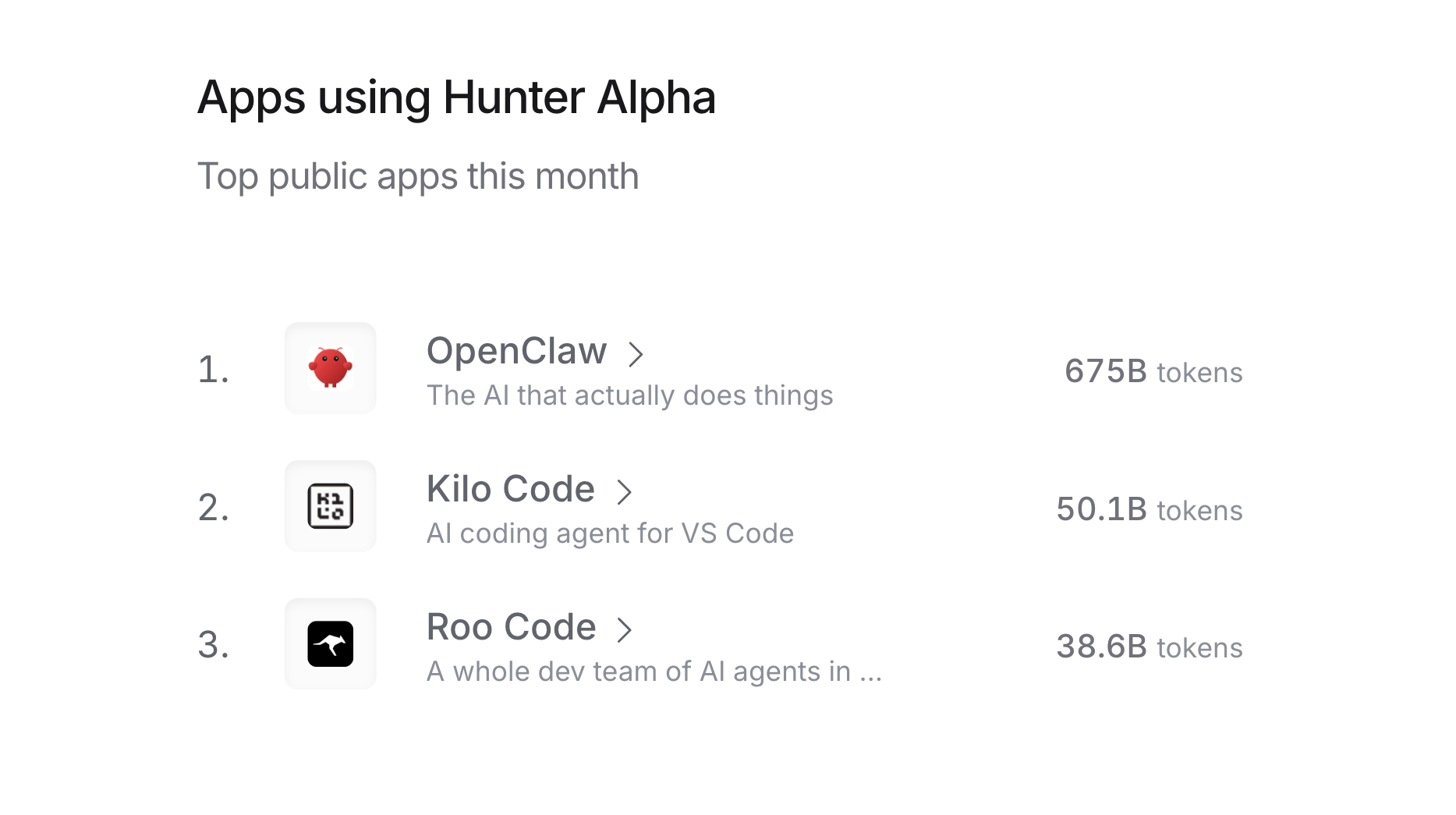
MiMo-V2-Pro is partnering with five major agent development frameworks, including OpenClaw, OpenCode, KiloCode, Blackbox, and Cline, to offer one week of free API access for developers worldwide.
Agentic Frontend Development
In frontend scenarios, MiMo-V2-Pro demonstrates strong end-to-end completion. Within OpenClaw, it generates polished, fully functional web pages in a single query, balancing visual quality with practical usability.
Prompt: Mimic 1990s print magazine aesthetics. Title in serif font like Playfair Display, body in monospace like IBM Plex Mono. Magazine-style multi-column grid with uneven column widths. Large titles offset left beyond the viewport to suggest print bleed. Images with sepia(0.2) filter and noise overlay. Page transitions mimicking page-turn effects. Navigation styled as a magazine table of contents, each item numbered 01/02/03, numbers enlarge on hover. Footer designed as a magazine colophon with a fake ISSN number. Paper texture background.
Prompt: Build a 3D tower defense game. Use 3D rendering with a modern, visually striking scene featuring diverse tower types and enemy varieties. Players place towers to stop enemies with varying speed, durability, and attack patterns; towers have different upgrade paths. Include dynamic backgrounds and attack effects like explosions and flames. Support level mode with increasing difficulty across multiple stages and enemy waves. Use Three.js or Babylon.js for smooth 3D rendering with optimized performance. Provide pause, resume, restart controls with score and health displays.
1M Context, Open API
MiMo-V2-Pro API is now publicly available with 1M-token context support, with tiered pricing based on usage:
Per million tokens. MiMo Cache Write is temporarily free. Claude pricing from Anthropic.
Try it now: platform.xiaomimimo.com
What's Next
MiMo-V2-Pro is a milestone in our pursuit of AGI. Its capability boundaries and system robustness need to be validated and refined by developers across real, complex scenarios. The Xiaomi MiMo Team will maintain a high pace of research and engineering iteration, delivering agent foundation models with progressively better overall experience.
Going forward, our core direction is tackling high-complexity reasoning and long-horizon task planning, systematically improving the model's generalization and decision-making in unknown environments, and moving toward truly general intelligence.